

The 3-Step Brand Identity Playbook for Scaling Digital Campaigns
Date
5 August 2026
Category
Brand Strategy & Visual identity
Reading Time
3 Minutes
The 3-Step Brand Identity Playbook for Scaling Digital Campaigns
Stop burning ad budget on disjointed creatives. Here is how to build a unified brand playbook that turns fast-scaling digital campaigns into predictable revenue.
Date
5 August 2026
Category
Brand Strategy & Visual identity
Reading Time
3 Minutes
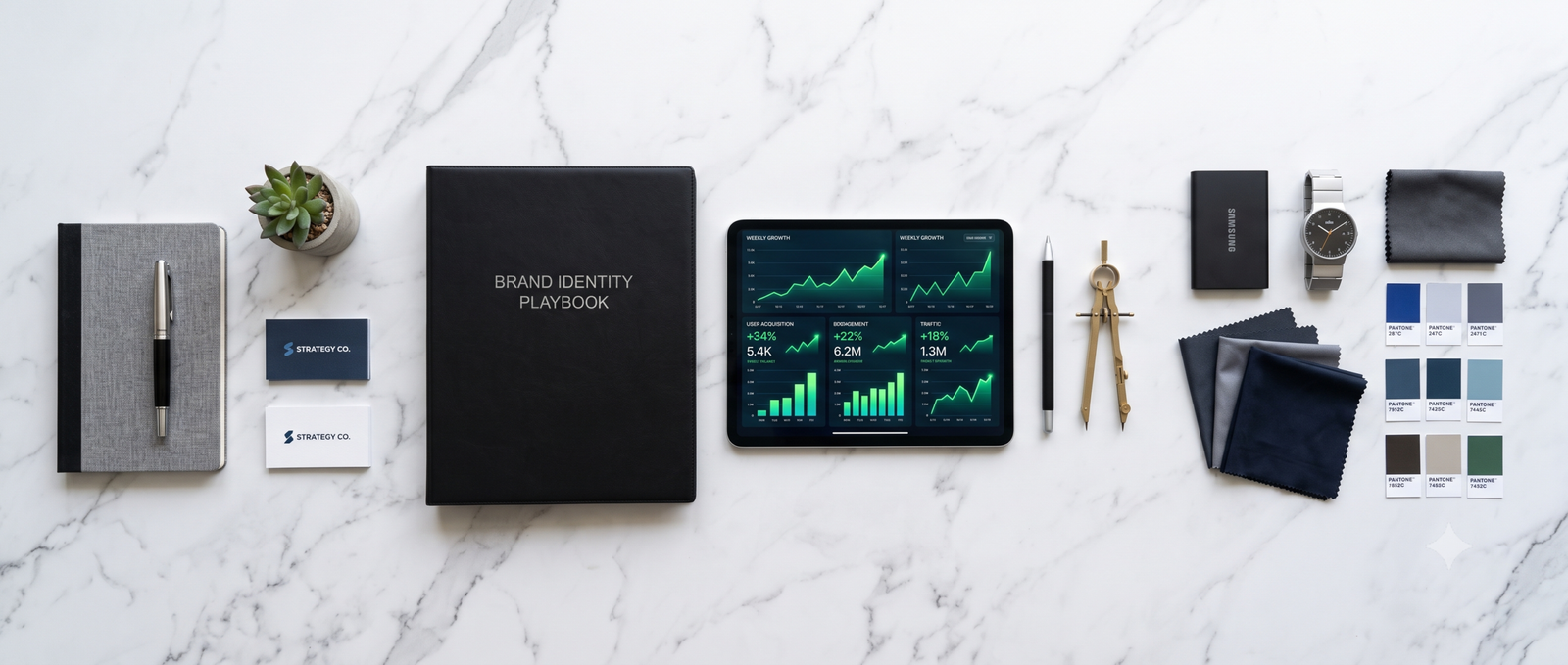
The Hidden Bottleneck in Campaign Growth
When companies attempt to scale their advertising efforts, the focus usually remains on the monetary side. As spending grows and channels are diversified, the main challenge becomes asset production and message alignment. Inconsistent brand guidelines lead to disjointed ad creatives at different stages of the funnel as well as misaligned CTAs. The audience faces the same brand in multiple ways at different touchpoints: high-quality video on Instagram, a significantly different landing page, and a wholly unrecognizable retargeting ad. This affects conversions at all stages, creating a bottleneck in the campaign’s growth.
A singular, up-to-date brand guideline serves as a growth enabler by providing the necessary flexibility within the confines of strict rules. It arms the growth team with the tools needed to produce multiple variations of ad creatives and copy while ensuring instant brand recall and a united front across all platforms.
Step 1: Establish Universal Visual Rules
Modern consumers are visually-oriented creatures. As they scroll through LinkedIn or TikTok, they must be able to identify your brand within a second. This helps in building recall and enables the creation of more conversions. To do this, it is necessary to create strict brand rules for the visual side of advertising. Set the rules of engagement and brand perception using the most common attributes. This way, you will always know what to do and what not to when designing visuals for your campaigns.
Step 2: Set the Tone of Engagement
Brand guidelines are not only concerned with design. It is essential to unify the tone of engagement across all channels and creatives as well. Multiple voices, such as copywriters, media buyers, or other agencies, contribute to the creation of advertisements, and each has its own style. To neutralize these differences, select three adjectives that reflect the tone of your brand. Next, compile a list of recommended phrases and terms to avoid. These simple measures will enable the writing team to produce high-quality ad copy in a short time without deviating from the tone that the brand dictates.
Step 3: Create Flexible Visuals Based on the Funnel Stage
To scale campaigns, you need to diversify and expand upon your existing assets. To do this, use the flexibility provided by your brand guidelines. At the top of the funnel, use more refined and developed visuals to attract the audience’s attention. For retargeting campaigns, you can use more “raw” materials, such as user-generated content or simple how-to videos. By following the general rules set by the brand guidelines, you can create interesting ad series at various stages of the funnel, thus maximizing conversions.
When choosing specific visual components, always consider the audience’s intent and what they expect from your brand. By unifying the overall appearance and removing excess detail, you can guide the audience through the funnel and maximize the number of conversions. The ability to scale campaigns using brand guidelines as a reference point is a significant competitive advantage.

Where We Work
Delhi . Jaipur
Working with brands worldwide
Phone
+91 911 65 28 998
Say Hello
Contact@phygitalcreative.com